Who Gets to Be Dolly After Dolly?
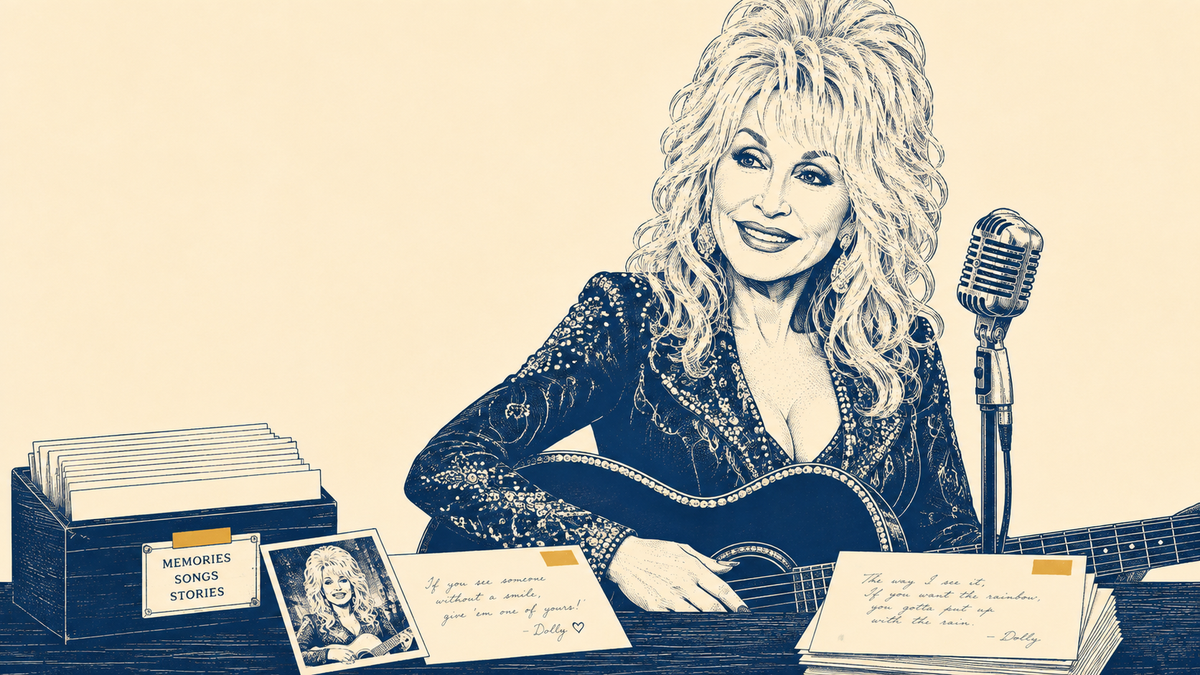
Yesterday, Dolly Parton died, and among all the stories now circulating about the songs, the wigs, Dollywood, the Imagination Library, the sheer scale of the woman, I keep coming back to something much smaller.
Two days before she died, in one of her last interviews, she mentioned she'd been talking to companies about avatar performances.
Three years earlier, someone had asked whether she wanted to live on as a hologram and she'd said absolutely not. She said it in that very Dolly way, joking about not wanting to leave her soul hanging around on earth, adding that she'd left enough material behind to keep everyone busy for a very long time.
Which, fair. Three thousand songs, films, TV, interviews, concert footage, a theme park. She didn't leave the world short of Dolly.
And yet, right at the end, with her health making live performance harder, she seemed curious about something else. Not immortality exactly. Maybe just another way of performing.
The conversations were early. There was no announcement, no grand plan for Hologram Dolly touring America in 2043. But the two statements sit next to each other now in a way I can't shake.
In 2023: no. In 2026: maybe.
And somewhere between those two answers is a question the rest of us are going to have to answer as well, probably with a lot less clarity and considerably fewer lawyers.
We have always tried to keep the dead
There's a habit in conversations about AI of acting as though human beings suddenly went strange when ChatGPT arrived. We didn't. We've always tried to keep people, and we've always used whatever was to hand.
Locks of hair. Death masks. Portraits, letters, diaries, home movies, answerphone messages we can't quite bring ourselves to delete. Photography gave us the face, recording gave us the voice, film gave us movement, and archives let fragments of people survive centuries after the people themselves were gone. None of that is new.
What's new is that the fragments can now be assembled into something that appears to do something.
A photograph waits for us to look at it. An AI version of someone can look back.
That's different. And celebrity is where we'll work out how we feel about it first, because celebrity is where the raw material already exists in ridiculous quantities. Also where the money is.
ABBA perform most nights of the week in east London as younger digital versions of themselves. James Earl Jones authorised Lucasfilm to use recordings of his voice with AI so Darth Vader could carry on without him, and died two years later. These conversations are already happening. Estates are having them, studios are having them, tech companies are having them, and most of us aren't in the room.
Dolly's story is different because she was. She thought about it while she was alive, and she answered the question twice.
Consent changes the question
There's a huge difference between asking can we recreate Dolly Parton and asking how did Dolly Parton want to be remembered.
The first is about what the technology can do. The second is about her.
That distinction seems obvious written down like that. I'm not convinced the technology is being built around it.
If a performer records their voice and movements and leaves instructions saying exactly how those recordings can be used, that's one thing. If, twenty years after they die, a company works out that an old contract technically gives it enough rights to make that person sing a song they never heard, endorse a product they never used, or say words they'd never have said, that's something else. Same technology. Completely different situation.
Preservation without consent becomes possession.
That's the heart of it, really, and it's why I've become interested in the idea of a digital legacy plan. Not a will with passwords in it, or instructions to delete Facebook. Something more awkwardly specific.
Can my voice be cloned? Can my photographs be animated? Can my emails and messages be used to train something that talks like me? Can an archive put words in my voice that I never said? Can my children decide any of this after I die, and can they make money from it?
Ridiculous questions. Although so was choosing between burial and cremation, once, and now we tick a box.
Two problems with my own argument
Here's where my neat little consent argument starts falling apart, which is probably a good sign.
The first problem is that consent expires in a strange way. Dolly being open to avatar performances in August 2026 tells us almost nothing about what she'd have made of whatever an "avatar performance" means in 2050. She could consent to the thing in front of her. Nobody can meaningfully consent to technology that doesn't exist yet, and a digital legacy plan doesn't solve that so much as hand the ambiguity to whoever's left behind. Which puts us back to trusting people, which is roughly where we started.
The second problem is harder, and I've been avoiding it.
The villain in conversations like this is usually a corporation. That's useful. Corporations make very satisfying villains.
But picture a woman whose mother has died. She's got four hundred voice notes from her sitting on her phone. She can't sleep. Her mother never wrote anything down about AI because why on earth would she. And now there's a tool that will take those voice notes and let her hear her mum answer a question one more time.
I don't think that woman is doing something monstrous. I'm not sure I even think she's doing something wrong. I think she's doing something very old with something very new, because grief has always been improvised, people have always talked to photographs and kept voicemails and set places at tables. And my argument about consent gets a lot harder when the person crossing the line isn't a company trying to monetise the dead. It's somebody who misses their mum.
I'd rather admit that than pretend it isn't there.
Memory already does strange things anyway. It edits, exaggerates, forgets, gets details wrong, turns people into slightly different versions of themselves over the years. And some of those failures are probably part of how we survive losing someone in the first place.
A simulation offers something else. The feeling, however temporary, that the gap has closed. Ask another question. Hear the voice again. Get another answer.
That's going to be very hard to resist.
Most people never got asked
This is the bit I keep coming back to, and it's where the story stops being about Dolly.
Dolly Parton got to state her terms. Journalists asked her directly and recorded the answer. When her position shifted, that was recorded too. She had an estate, a business, lawyers, decades of control over her own image, and enough cultural weight that people will probably take her wishes seriously now she's gone.
That is not how most people enter an archive. Usually it's the opposite.
Most of the people whose lives sit inside archives were never asked how they wanted to be remembered. Someone else took the photograph. A researcher made the recording. A descendant donated the letters. An employer kept the documents. An institution ended up with the box.
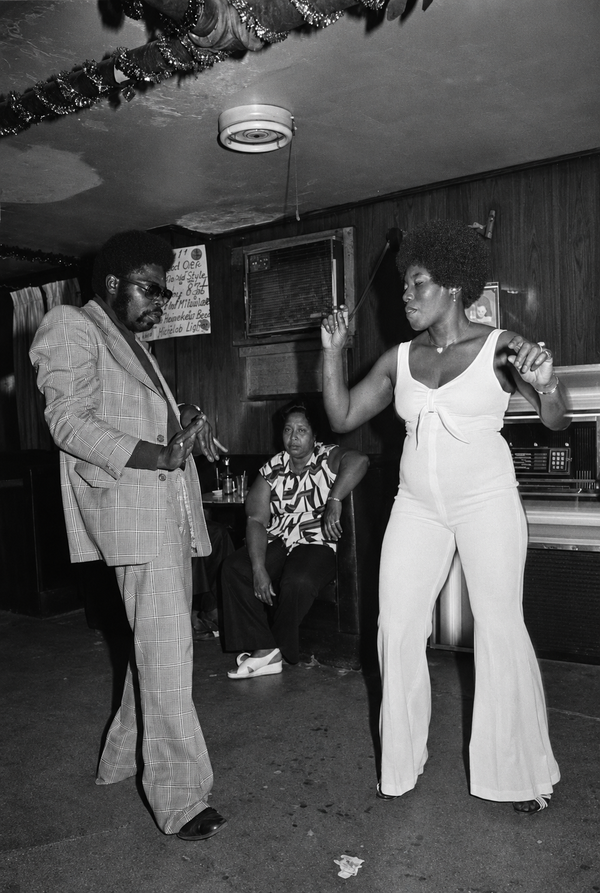
That's true across collections generally, but it gets particularly uncomfortable with Black archives, where so much of the record is scattered, incomplete, held by institutions a long way from the communities it came from, and where what survived was often made by somebody looking at Black people rather than by Black people documenting themselves.
So when the tools get good enough to animate a photograph or generate a voice from a few seconds of audio, the hardest ethical problems will show up exactly where consent is thinnest. And those are often the same collections under the most pressure to become interactive, accessible, engaging, fundable.
Make the archive come alive sounds wonderful until you ask who gets to decide what alive means.
Consent, as a framework, starts to look a bit like a luxury good. It works beautifully for Dolly Parton. It does almost nothing for a man photographed in 1953 whose name nobody bothered to write down.
I don't have a tidy answer to that. I'm increasingly suspicious of tidy answers in this area. But any conversation about digital resurrection that starts and ends with individual consent is mostly a conversation about people who already had some power over their own image, and historically that's not most people.
She may have been right both times
I like that Dolly gave two different answers. I don't think they cancel out.
In 2023 she may genuinely have thought eternal hologram Dolly sounded awful. Three years later, with touring getting harder, an avatar that could perform while she was still around to approve it might have sounded like a completely different proposition. Both can be true. We're allowed to change our minds about technology. We're allowed to say yes to one thing and absolutely not to another.
Yes, preserve this concert. No, don't make me say new things. Yes, use my voice in an exhibition. No, I don't want a chatbot. Yes, build something while I'm alive and can see what you're doing, and when I die, stop.
I don't want to oversell where the technology actually is, either. A convincing avatar performing material someone already recorded is close, and in some versions already here. A system that can improvise, think and behave like a person in a way that would fool the people who actually knew them is something else entirely, and we're nowhere near it, whatever the marketing says.
But we don't need finished digital people before we start thinking about what we're building. The ethical questions have arrived well ahead of the engineering. They usually do.
Dolly Parton spent her whole career constructing Dolly Parton with enormous care. The clothes, the humour, the songs, the business, the public Dolly and the private person underneath. She understood better than most that an identity can be completely real and deliberately made at the same time.
Which makes it oddly fitting that this question is sitting at the edge of her life. Not whether technology can keep us here.
How much of ourselves we actually want to leave behind. And who we trust to hold it once we're gone.