What Did I Actually Make?
What Did I Actually Make?
I took one old photograph and built a world around it.
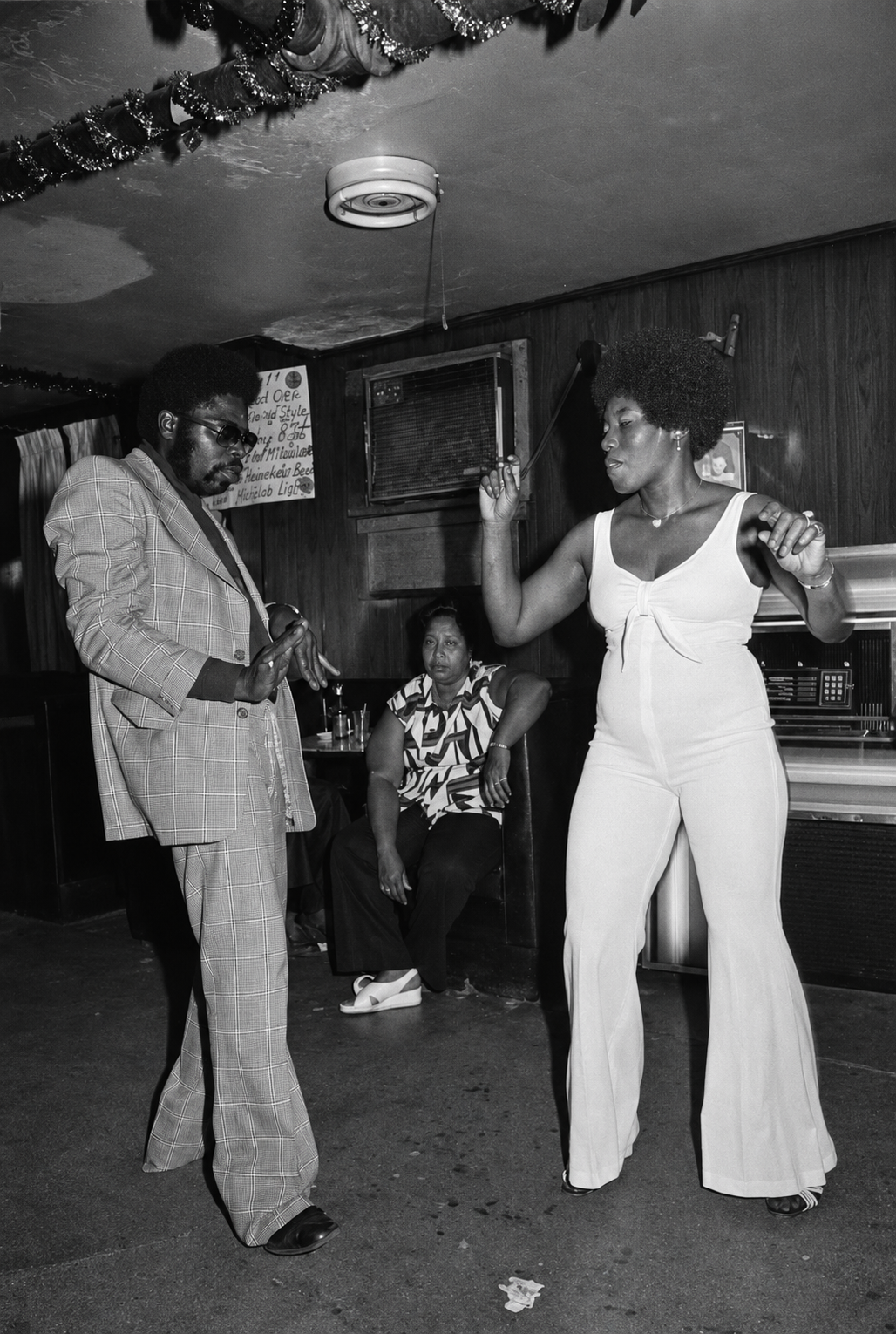
I found an old black-and-white photograph online of two people dancing. I don't know who they are. I don't know who took it. I don't know who owns it now.
I didn't ask anyone for permission.
I used it because I was curious about what would happen if I took one still image and tried to make a scene out of it. Not just nudge the people into motion. Build around them. Give the moment some time, some rhythm, a sense that something had happened before the shutter and something was going to happen after.
And once I started, it got away from me. Not badly. Just in the sense that I thought I was making one thing and slowly worked out I was making another.
It wasn't one click
I should say that, because "I used AI to animate an old photograph" makes it sound like I uploaded the image and the machine did the rest.
There were a lot of versions. Some close, some wide, some weighted towards the man, some towards the woman. Some convincing. Some completely off. Some that changed the feeling of the whole thing in ways I hadn't expected. And I kept going back in, changing things, trying again, choosing one over another.
At some point I stopped watching the technology generate and started directing it.
Every time I thought no, that movement's wrong, or yes, that one feels natural, I was making a judgement about two people I know nothing about. I don't know how they danced. I don't know what was playing. I don't know whether they were together, whether they'd just met, whether this was the best night of their lives or a completely ordinary Thursday.
I have one frame. One fraction of a second. And from that I helped build a sequence.
The AI wasn't just inventing. I was curating the invention.
The image being online made it very easy
Find image. Save image. Upload. Generate.
There is almost no friction in that, and the frictionlessness is the problem. Nothing stopped me to ask who owns this, who these people are, whether the photographer is alive, whether it sits in a collection somewhere with a history I know nothing about, whether anyone involved would have wanted it.
The image was there, so I used it. Which is how most of us have been trained to behave online.
But public and available are not the same thing.
And even if I had clean rights to the photograph, there's a second question underneath the first. Did I have permission to make the people in it do things they never did?
That's a different kind of question. Cropping alters a frame. Colourising interprets information that isn't there. Generating movement gives the people inside the image behaviour.
They stop being represented. They start being directed.
And I liked the result
Which is what makes a neat moral position on this impossible.
I like the video. A lot. I've watched it over and over. There's something uncanny about it and something genuinely moving at the same time. The photograph has atmosphere now. The room feels occupied. The people stop being frozen and become, for a few seconds, two people you're watching.
So of course this is going to be everywhere. Families will use it. Museums will use it. Archives will use it. People will use it on photographs of their parents and grandparents because of course they will.
We have always wanted more from photographs than photographs can give us. What happened next? What did her voice sound like? How did he move? What did that room feel like?
The difference now is that the technology is willing to answer. Even when nobody knows the answer.
The problem isn't that AI lies
We already know it can do that. What interests me more is how fast something invented starts to feel right.
The finished video doesn't present itself as a stack of guesses. It presents itself as a scene. You don't see the versions I rejected, the odd movements, the framings that pushed it too far. You see the one I picked, and I picked it partly because it looked believable.
Once the seams disappear, invention starts to look like evidence.
Archives are full of gaps, and that isn't a flaw
A collection has a photograph but no names. A letter but no reply. A recording with no context. A box where half the story went missing decades ago.
Anyone who works with archives knows this. What gets lost in the excitement about these tools is that sometimes a gap is just a gap. Sometimes "we don't know" is the most honest thing an archive can say.
AI has no respect for that sentence. It wants to complete the picture. Give it part of an image and it will imagine the rest. Give it a still person and it will invent movement. Give it a room and it will build whatever sits outside the frame.
Filling a gap is not the same as recovering what was lost. And if the generated version looks good enough, most people won't notice the difference, let alone care about it.
This is where it stops being general
The people in the photograph are Black. That isn't incidental, and it isn't because Black archival material should be treated as untouchable.
It's because the gaps aren't evenly distributed. So much Black history survives in fragments. Photographs with nobody's name attached. Collections built by institutions rather than communities. Images taken by outsiders. Recordings made by researchers who owned the tape. Material that lasted because somebody else decided it was worth keeping.
That's a record with more holes in it than most. And I have just demonstrated, on a laptop, with no expertise and no permission, how easily those holes can be filled with something plausible.
Then there's the taste question, which I didn't see coming until I was halfway through.
I was making aesthetic decisions. Which version felt warm. Which movement looked elegant. Which framing felt intimate. Which shot gave the scene more energy. Which version made the couple look closer.
Those are creative choices, not factual ones. But because the source image is old, creative choices start passing themselves off as historical ones. I wasn't restoring a missing piece. I was deciding which missing piece I preferred.
I was deciding what kind of Black life looked believable to me. And I don't know these people.
So what did I actually make?
Not a restoration. Not documentary. Not fiction either, because the photograph is real, the people are real, the room existed.
But the sequence didn't. The movement didn't. The camera angles didn't. The world around that one frame got built afterwards, by me.
The best description I've got is a guess with production values.
That's what it is. A guess polished until it stops looking like a guess.
I'm not saying don't
That would be easy and I don't believe it. I'm glad I made it. Making it forced these questions on me in a way that reading about them never did.
And the possibilities are real. Old photographs becoming easier to sit with. Collections reaching people who'd scroll straight past them otherwise. Artists working directly in the incomplete parts of the record. I'm not against any of that.
I'm interested in what happens when it becomes ordinary. Because at that point archives stop only preserving what survived and start generating around it. The old question was what gets kept. The new question is what gets invented around whatever's left, and who decides that's acceptable.
So a few things should stop being suggestions. Say when something has been generated. Keep the original next to the version. Document what you rejected, not just what you kept. And accept that some images should be left where they are.
"Bringing history to life" has stopped sounding harmless to me. Half the time we aren't bringing anything back. We're making something new and setting it down very close to the old thing, close enough that the two start to blur.
I made this because I was curious. I'm still curious. I'm also more careful than I was.
The photograph already contained a life.
What I made was something else, and we don't have a word for it yet.