We Were Born the Same Year
I am writing this with a Donny Hathaway album playing from a folder I downloaded over Soulseek six years ago. The album is fifty-three years old. The folder lives a few clicks away from recordings I made of my own voice last month, and a few clicks from Amy Winehouse sessions I have been returning to all year.
We were born the same year.
None of this used to be possible. Most of it is normal now.
I have been thinking about what is normal about it.
Earlier this year, I watched Sinners in a cinema. I was prepared, I thought, for what Ryan Coogler was doing. I had read enough about the film to know roughly what kind of horror it was, what kind of music it would carry, what kind of historical weight it was reaching for.
The juke joint scene caught me anyway.
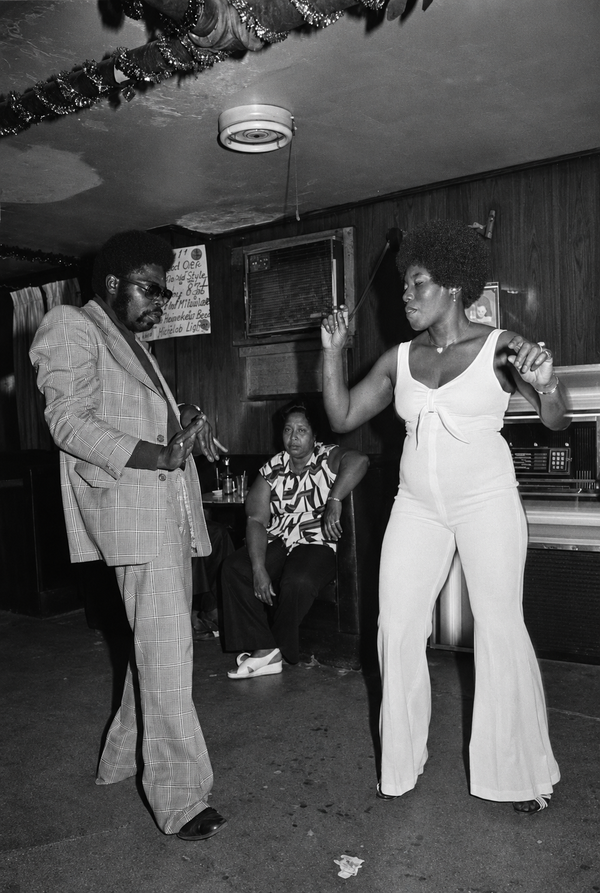
There is a moment, when the music is at its highest, where the room stops being only one room. Musicians from the past and the future appear inside it. Generations of Black performers, recognisable and unrecognisable, are suddenly in the building with the band. The scene argues, without arguing, that this is what the music has been doing all along.
I sat in the cinema and the thing I thought first was: I know this room.
Not because I have ever played in a juke joint. Not because I have any musical inheritance of that direct kind. But because that scene, in a way I am still working through, is the most accurate cinematic image I have ever seen of what listening has become for someone like me, in this exact moment, in 2026.
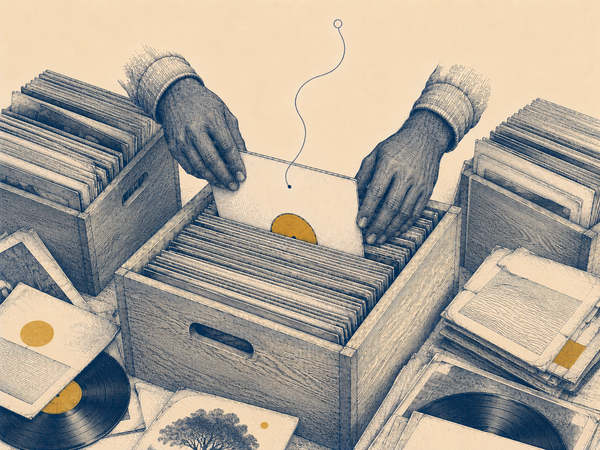
To sit with an archive of a century of Black music now technically and practically inside one folder, one tab, one search, is already to sit in that room.
By "we," I mean Amy and me. But I also mean those of us old enough to remember scarcity and young enough to be remade by access.
We were born in 1983 and lived through the same seismic shifts. The internet arrived when we were fourteen. LimeWire and Soulseek when we were seventeen. The iPod when we were eighteen. Within five years, the relationship between a listener and an archive changed permanently.
Before, you owned what you owned.
After, you had access to almost everything, almost instantly, mostly without paying for it.
It was not elegant. It was not ethical in any clean, respectable sense. It was slow downloads, mislabeled files, corrupted tracks, albums with missing songs, live sessions ripped from nowhere, and the small private thrill of finding something at 2am that felt like it had been waiting for you. A blue progress bar could feel like a door opening.
That is the window we grew up inside.
The condition that makes the juke joint scene legible to me was assembled around us in real time. Most people who write about that condition treat it as loss. The death of ownership. The flattening of taste. The algorithm swallowing curiosity whole. Some of that is true. But I do not remember it only as loss.
I remember it as the door opening.
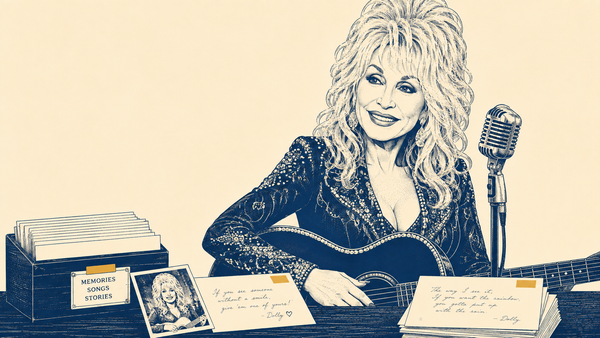
Amy Winehouse was the first young pop-soul artist of the 2000s I heard fold those older voices directly into the music. On "Rehab," Donny Hathaway is not just an influence. He is named inside the song: "There's nothing you can teach me that I can't learn from Mr Hathaway." On "October Song," written after the death of her canary, Ava, she imagines the bird "reborn like Sarah Vaughan." Even there, in a song about a small private grief, the old vocal lineage enters the room. And when she covered "Teach Me Tonight" on Jools Holland, she did not imitate Dinah Washington so much as step into conversation with her.
These were not decorative references. They were coordinates. She was telling listeners where the room was, who was already inside it, and how to hear her voice in relation to theirs.
I was already finding some of those records. I had Hathaway on my parents' shelves and the beginnings of a collection of my own. But Amy was the first contemporary I encountered who was openly doing the same thing, only with a platform, and louder, and her voice carrying it.
Her first album came out when we were both nineteen.
Across her records, she name-checks Ray Charles. She name-checks Sammy Davis Jr. The beats come from Salaam Remi, who had already been building the sound of New York hip-hop for a decade. "In My Bed" sits over the beat from Nas's "Made You Look." The voice carrying all of this is a Jewish girl from North London, nineteen when she started.
The room she conjured on that record was not the same room as the juke joint in Sinners. But it was the same kind of conjuring.
The film, when I watched it, did not show me something new. It showed me the form of something I had been listening to since I was nineteen.
We met at twenty-four. We were friends. I am careful with what I say about her, because friendship is not an archive for public use. There is another essay about who she was to me.
This one is about what she became.
She died at twenty-seven. The records stopped coming. She became what she had been pointing at.
Like Ray. Like Donny. Like Sarah.
She is now in the same folder as the artists she put in my head when I was nineteen, and the recordings I made of my own voice last month, and Hathaway from before I was born. The juke joint scene shows ancestors and descendants in the same room. My listening life is now mostly that room.
Amy is in it now in a way she was not when she was alive, and also in the same way she always was.
The folder does not distinguish. It simply contains.
Frank is twenty-three years old now. The distance between Amy's record and a teenager finding it in 2026 is the same distance she stood at when she found Donny Hathaway in 2003. Whatever she did with that distance, they will do with theirs.
The record exists on drives all over the world. It exists in playlists shared between people who were not born when she made it. The room she opened in 2003 is now opening for a generation she will never meet.
This is the part that does not get said often enough.
The argument Sinners makes about Black music is also an argument about what the digital archive does to time. Not just historically, but personally. For those of us who came of age as music became searchable, downloadable, portable, and endless, listening stopped being linear.
The people we loved who are gone. The people we loved who are still here. The records that have not been made yet. The voices from before we were born. They are all one search away.
Whatever else streaming is, whatever else the algorithm is, whatever else the death of the record shop took from us, that room has been built around us.
We are listening in it whether we know it or not.
I am still writing this with the Hathaway album playing. I have not stopped it. Amy's recordings will come on next because the folder I am in plays through alphabetically and I have not arranged it that way on purpose.
The arrangement is incidental.
But the alphabet does what the archive does.
It puts things in the same place.
The conjuring is happening. It is happening while I write. It has been happening the whole time.