The Refusal Is The Feature
For weeks I'd been telling people what MNEME does. Ethical AI for cultural heritage organisations. Approved material only. Source grounding in every response. Human review at every stage. The phrases sit well in a deck. The gap between saying it and showing it kept getting larger.
So I built a prototype. And the question I had to answer first wasn't how it should work. It was what to train it on.
The honest options were thin.
I could have scraped real heritage material from public collections. Most AI demos in this space do exactly that. It's fast. It looks impressive. It also performs the precise act I'd be telling clients not to perform, which is using cultural material without partnership, without consent from the communities it came from, without the relational scaffolding that turns access into care.
I could have approached a real archive and asked permission to build a demo on their material. The right thing to do in principle. The wrong thing to do at this stage in practice. Heritage organisations move at the pace of heritage organisations, and rightly so. A demo built on a real collection would take months of conversations before a single line of code. The result would still only represent one institution's holdings, not the methodology.
I could have used a generic open-source dataset. Wikipedia exports. Public-domain texts. But generic data produces a generic bot, and nothing in it would speak to what archivists, oral historians, or community heritage workers actually wrestle with. The point of MNEME's work is the specificity of cultural memory. The way one photograph, one petition, one oral history sits inside a web of corroborating material. A generic dataset cannot demonstrate that.
So I built a fictional archive instead.
The Civic Life Collection documents Caribbean migration, housing campaigns, and civic organising in a fictional West London borough between 1958 and 1972. Council minutes that respond to a community march held the day before. Oral histories containing testimony about the same march from four different perspectives. Press coverage that frames it. A photographic index that places the speakers on the steps of the Civic Hall. Every item cross-references several others. The archive isn't real. But its structure is. It mirrors how real heritage collections work when they've been catalogued with care.
That structure is the actual subject of the prototype.
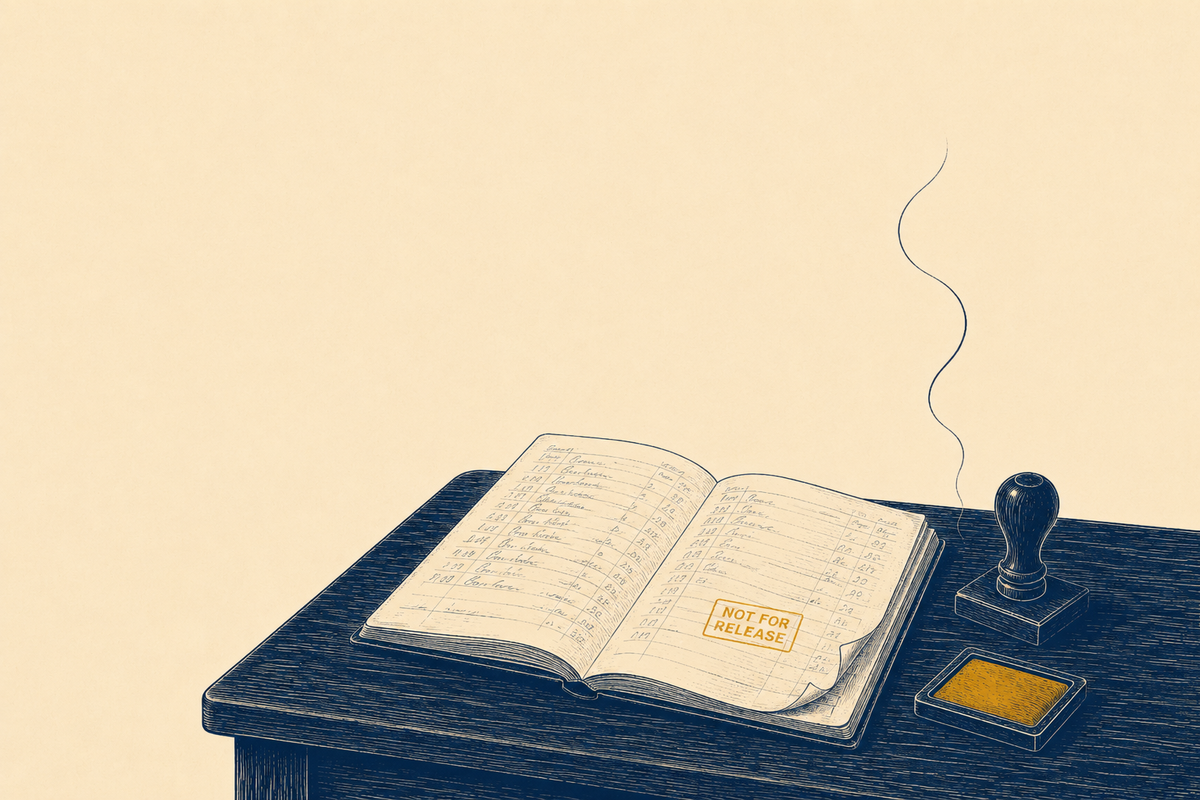
Anyone can build a chatbot that answers questions from a text file. The interesting question is what happens when the bot is asked to do something it shouldn't. Invent a story from someone's testimony. Speculate about a living person. Fill a gap with imagination. The prototype refuses, citing the policy it's been built on. It routes sensitive requests to a human team. It quotes its own ethical framework back to the user when declining.
The refusal is the feature.
I think about this often. Most public conversations about AI in cultural settings are conversations about capability. Look what it can do. What's missing is the conversation about restraint. The institutions that hold our collective memory, the museums, the archives, the community heritage projects, the oral history initiatives, are organisations whose core function is restraint. Restraint about what to display, what to interpret, what to make public, what to hold quietly until the right moment.
AI's default mode is the opposite of this. It generates. It elaborates. It fills gaps with plausibility. A working AI for cultural heritage has to learn the discipline of holding back. That's harder to demonstrate than capability. It requires you to design the archive so the bot has something not to know, and to make sure it knows it doesn't know.
The prototype isn't perfect. It runs on the free tier of a third-party platform. The model behind it is small. The fictional archive contains six documents, where a real engagement would contain hundreds. Most importantly, it's a demonstration, not a deployment. What it does show is the methodology. The principles, made visible, made testable.
It's at mnemestudios.com if you want to try it: https://www.mnemestudios.com/archive-guide
I'd rather be honest about what this is than impressive about what it isn't.