Amy Winehouse Called It Blasphemous. Now It's Happening to Her
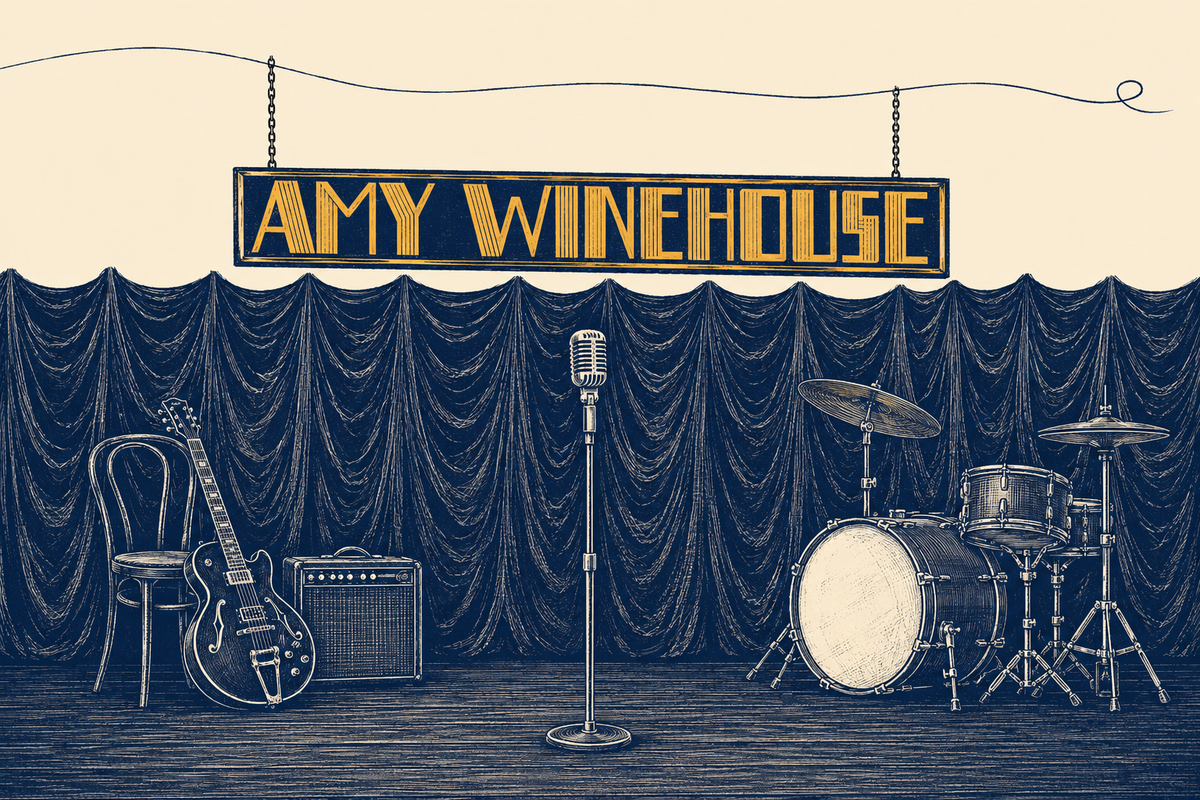
I found the video by accident. Someone had made an AI-generated Amy Winehouse Tiny Desk concert, the stripped-down NPR format where artists sit in a small office and play like they're performing for friends. No stage. No production. Just the music and whoever's in the room.
Amy never did a Tiny Desk. She died in 2011. The format had barely started when she was alive.
But there she is in the video, or something that sounds exactly like her, singing like it's a Tuesday afternoon, like she just wandered in from the street and sat down. I felt two things at once. First, sadness. Then underneath it, something almost like happiness. Like a door had opened into a version of things that didn't happen. An alternate universe where she kept going.
I knew Amy. We met in New York in 2007. My phone rang one afternoon and it was her. A mutual friend had insisted she call me. The next day she came to the hair salon where I worked and got her hair done. What followed were months of texts and phone calls, the kind of friendship that builds quietly, in between things. A few months later I was guest of honour at her first ever US show, at Joe's Pub in downtown Manhattan.
I'm telling you this not to make this piece about me. I'm telling you because it changes the question. When I hear that AI voice, when I watch that Tiny Desk video, I'm not hearing a simulation of a cultural icon. I'm hearing something that sounds like a person I knew. And that makes the consent question feel less like a policy debate and more like something else entirely.
She didn't consent to any of it.
Not the commercial voice generators where anyone can upload a track and have Amy sing it back. Not the AI project that generated a lost Amy Winehouse song as part of a mental health awareness campaign. Not the chatbot where you can type a message and get a response back, as if she's somewhere on the other end of it. Not the Tiny Desk video I found last week.
But there's something beyond consent that I keep coming back to. Amy hated inauthenticity. It wasn't just a preference. She wore her authenticity like a crown. I remember a fan once gave me a CD to pass on to her, a rapper who had remixed Nina Simone songs and sung over them. She threw it away. Called it blasphemous, casually, like the verdict was obvious. Everything about how she moved through the world was rooted in a refusal to be anything other than what she was. The idea of her voice singing songs she never chose, in performances she never agreed to, produced by machines she never knew existed. I don't think she would have found it flattering. I think she would have found it a violation of something she considered fundamental to who she was.
That's not speculation about a stranger. That's something I know.
The question people usually ask here is legal. Who owns the voice? The estate? The label? Nobody? It's a live debate and the law hasn't kept up with the technology. But I don't think that's the most interesting question.
The most interesting question is what is a voice without the person?
Amy's voice wasn't just a sound she made. It was something she built over years. Shaped by where she grew up, what she listened to, who she loved, what she lost, what she survived. You can't separate the voice from the life that made it. When AI reproduces the voice, it gets the sound right and misses everything else.
The Tiny Desk video sounds like her. It doesn't sound like what she would have made next.
That's the grief underneath that feeling. The AI version of Amy kept going, kept recording, kept performing. And it's convincing enough to make you feel something. But it will never surprise you the way she would have.
Because Amy was unpredictable in the best possible way. Her records make that clear even if you never met her. Back to Black didn't sound like Frank. Whatever came next wouldn't have sounded like Back to Black. She was moving somewhere. We never found out where.
AI can't replicate that. It can only work with what already exists. It gives you more of the same, better produced, endlessly available. That feels like the real loss to me. Not just that her voice is being used without permission, though it is. But that the music she was moving toward doesn't get to exist, and instead we get a convincing imitation of it.
I work in AI. I build tools that help cultural organisations make their archives more accessible, carefully, with consent and human review at every step. I think about these questions every day.
And I still felt that door open when I watched the video. Still felt the pull of it.
Which tells me something. This isn't only a legal question or an ethics question. It's about what we do with the people we've lost, and whether our need to keep hearing them is really about them at all.
I don't have a clean answer.
What I know is that Amy was a real person who called me out of nowhere one afternoon, came and got her hair done, and sang at a small venue in Manhattan like she was performing for the first time, because she was. At Joe's Pub that night, she stammered through all the talking parts. She had no idea how good she was.
AI cannot replicate that. It can only start from the finished version, the icon, the recordings, the myth that formed after. It has no access to the nerves, the not-knowing, the person who was still becoming something. Whatever that Tiny Desk video is producing, it isn't her. It's a mirror pointed at what we've already lost, and the reflection is just close enough to hurt.
Lyndon is the founder of MNEME Studios, an ethical AI consultancy working with cultural heritage organisations. He writes about AI, memory and the futures we build from the past at memorytech.ghost.io