Echoes of the Past, Codes of the Future: A Meditation on Memory and Tech in Sintra
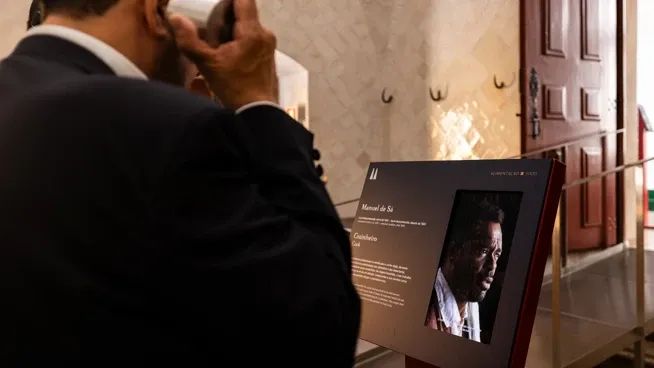
Last week, I slipped through the moss-clad corridors of the National Palace of Sintra and stumbled on something quietly electrifying: small, almost hidden audio kiosks beside frescoed doorways. You lean in, press a little speaker to your ear, and an actor—portraying a cook, a maid, a coachman—whispers a slice of someone’s life from centuries ago. No flashy screens, no AI avatars. Just breath-warmed human voices, suspended in those ancient walls.
This delicate interplay of analogue intimacy and digital curation reminded me why memory needs both soul and scaffolding. Here’s a meditation on how tech and memory can dance without one stepping on the other’s toes.
1. Voices Behind the Velas
Parques de Sintra commissioned fourteen micro-films—short, immersive performances in situ—each brought to life by Portuguese actors embodying real historical figures. Imagine hearing the king’s treasurer confessing a stolen coin’s fate while standing beneath a vaulted ceiling, or a lady-in-waiting retelling a court scandal in a sunlit gallery. Those little tremors in the actors’ voices—pauses, stumbles, soft chuckles—are pure human spark. They remind us: history isn’t a spreadsheet, it’s a trembling heartbeat echoing through time.
Takeaway: When you digitize memory, guard those tremors. Let the crackles, hesitations, and unscripted breaths remain.
2. Tech as Tender Megaphone
Now, picture augmenting that audio with a fingertip tap: an app that unfurls the cook’s original recipe for chocolate pastries, or a chatbot that mischievously answers, “What was the palace dog’s name?” The tech doesn’t hijack the narrative; it unrolls an invitation to wander deeper. It’s a megaphone that amplifies, without drowning out, the analogue warmth.
Takeaway: Use code to connect voices to maps, manuscripts, and 3D rooms—but let the story’s soul stay center stage.
3. The Minimalist’s Manifesto
Sintra's kiosks felt perfectly poised—technology woven so discreetly you almost forget it’s there. In your own work, ask:
- What’s the least I need to add to enrich this moment?
- Where does the analogue heart beat strongest, and where can digital wings lift it higher?
- When should tech step forward, and when should it simply bow out?
Takeaway: Seek that sweet spot where a single QR code, an unobtrusive audio player, or a whisper-soft AI prompt coexists harmoniously with lived experience.
4. Memory as Living Tapestry
Memory isn’t a museum piece—it’s a river in motion. Just as Sintra’s actors animate dusty halls, your digital archives can evolve: updating transcripts, inviting guest annotations, or nudging visitors with AI-driven prompts like, “Tell me your first glimpse of this room.” Keep memory active; let it breathe, grow, and loop back on itself.
Takeaway: Build “living documents” that welcome edits, new stories, and fresh perspectives across generations.
5. A Gentle Reckoning
There’s no grand manifesto here, no zerosum contest between reel-to-reel and real-to-digital. It’s a simple invitation: lean into human voices, and let technology be their echo—carrying whispers farther than ever before. Our archives, like Sintra’s palaces, deserve both hushed reverence and kindly amplification.
Call to Reflection
- What analogue ritual—an oral history circle, a cassette-tape interview—could you digitise first?
- Where might a single line of code enrich that ritual without stealing its glow?
- How can your next project choreograph a dialogue between human warmth and machine reach?
In the end, memory and tech aren’t gladiators in a Coliseum—they’re dance partners, each lending the other grace. Let’s keep both alive: one echo and one elegant line of code at a time.