This Is Why I Started
I’ve been restoring images of people’s loved ones for about three years now, and still - the power of these moments never stops moving me. What began as quiet curiosity became a calling. I recognised early on that AI could help us tend to memory—not just as data, but as something sacred. Something human.
I started small. Teaching myself how to use basic apps like Remini, Snapseed, and Lightroom Mobile - tapping and swiping and zooming in on old, fading faces. At first, I was just experimenting. Fixing blur, adjusting contrast, learning how light could be reimagined. Over time, I moved into tools like Photoshop, Topaz, and custom AI workflows that allowed for deeper, more respectful restorations.
But the tech was never the point.
What stayed with me were the messages:
“It’s amazing to be able to see him again.”
“I’ve never seen this photo look so clear… it’s like she's back again.”
Those words filled my heart and told me this is important work. Work that lives quietly at the intersection of grief, memory, and technology. Work that feels both tender and urgent in our increasingly digitised world.
Somewhere along the way, I found myself drawn deeper into the past - not just restoring family photos, but trawling through digital archives, searching for the most faded and most damaged portraits of formerly enslaved people. I looked for the nearly forgotten. The unnamed. The overlooked. The ones whose faces time was trying to erase.
It felt like an act of devotion.
I named the project Supreme Beings—a way to honour them not just as historical figures or records, but as divinity made flesh. As people who survived the impossible, and whose presence still speaks, if you learn how to listen.
Each photo I restored felt like a small resurrection. A way of saying: I see you. You mattered. You still do.
For many Black families whose histories were never fully archived or were violently disrupted, these images hold generational weight. Sometimes a single photo is all that remains. A memory passed through the hands of time, now reborn as pixels.
When I restore an image, I don’t just enhance it. I listen. I sit with the silences, the textures, the cultural weight. I try to honour what the image meant before it was damaged, and what it still means now.
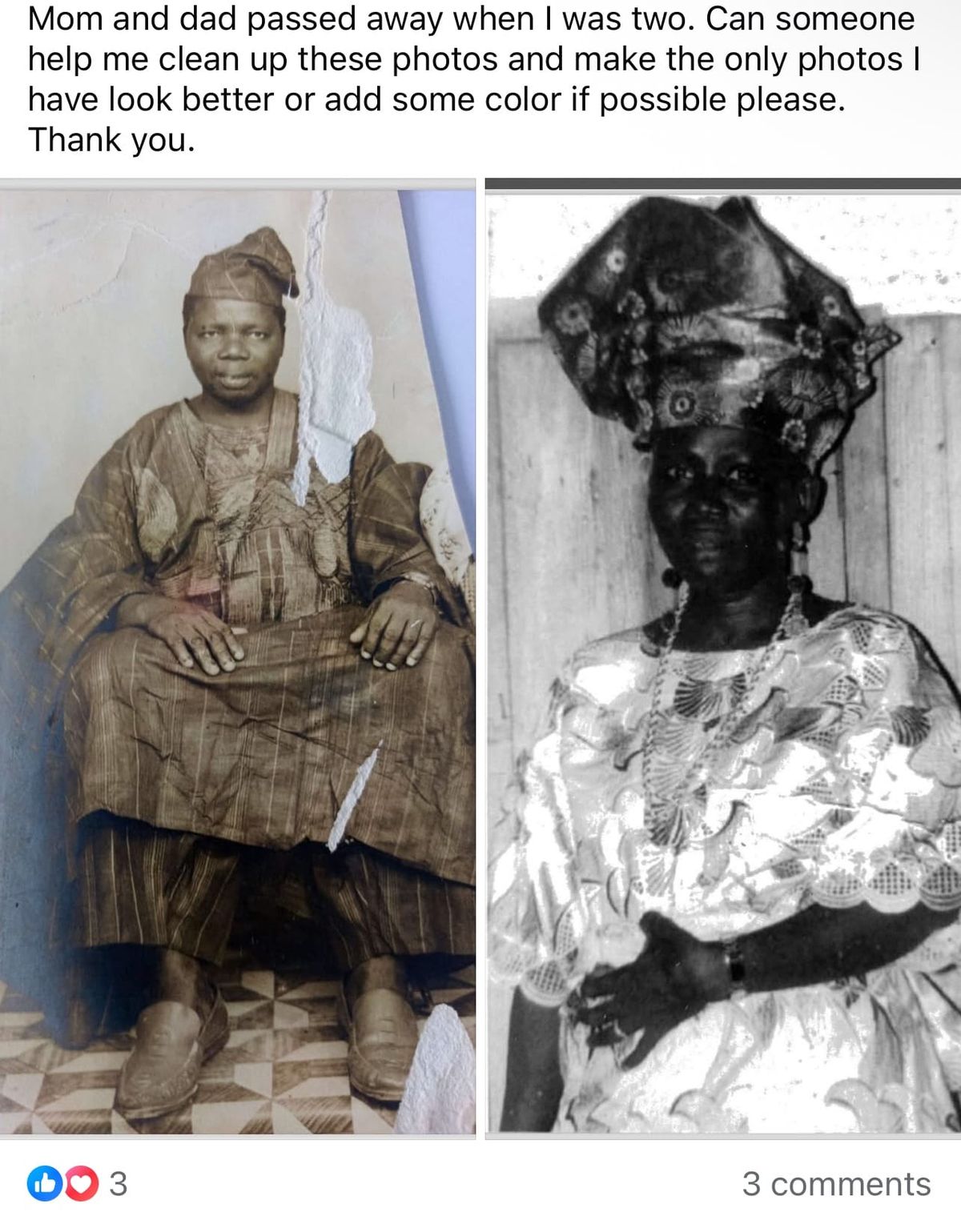
Posts like the one I saw recently - someone asking for the only picture of their father to be cleaned, taken at his sister’s funeral - stop me in my tracks. These are not just digital edits. These are acts of care. Of re-connection. Of resurrection.
And in this new era, where AI and technology is often feared or misunderstood, I want to offer a different vision. One where it helps us remember. Where it becomes a companion to grief, a steward of memory, a tool for cultural repair.